Dawn Apart Power Grids & Soylent Food
Keep Sirius B3 lit and fed — solar by day, steam by night, Soylent Maker loops that never starve the Magpie.
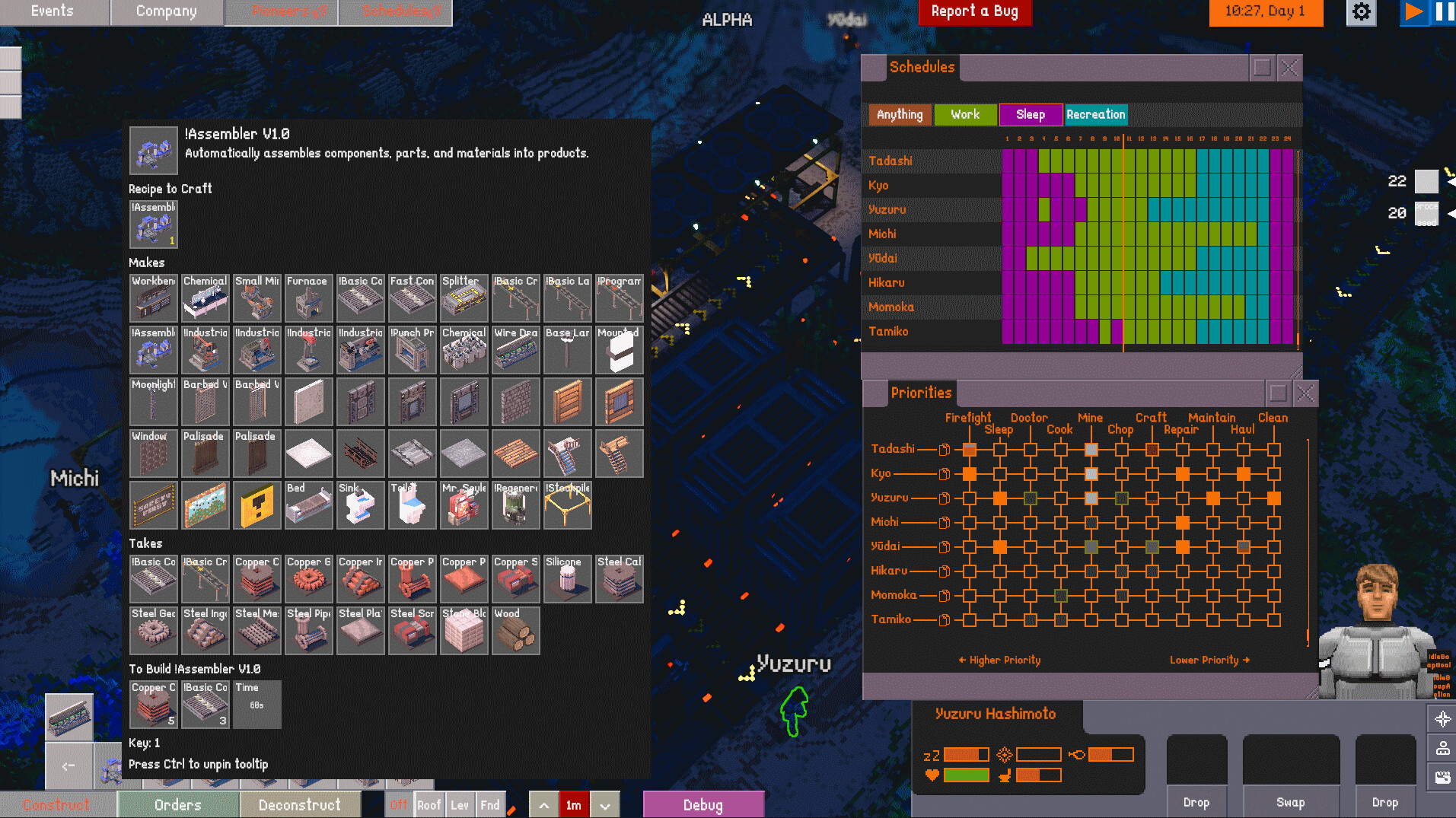
Every Dawn Apart failure mode eventually traces back to watts or calories. Drills stall, lights die mid-raid, furnaces go cold, and colonists stop working when the power grid or Soylent loop collapses. This guide explains how to design a resilient grid with solar, steam engines fueled by coal, coke, or wood, accumulators, and utility poles, then how to keep the Soylent Maker fed with organic matter while rooms stay within temperature, light, and air budgets on Sirius B3.
Pair this page with Getting Started for the opener and Automation & Factory when machine count climbs. Raid nights are the exam — see Defense & Night Raids. Lucrum lines are power hungry; budget them using Mining Lucrum 115.
Power architecture that survives Hotdry nights
Day layer — solar
Solar is clean daytime income. Spread panels where shadows from Magpie superstructure and future walls will not cripple output. Solar alone is not a night plan. Treat it as accumulator charging and surplus for daytime digs.
Night layer — steam
Steam engines burning coal, coke, or wood are your overnight backbone. Site engines near fuel storage but not inside sleeping rooms choked with heat and noise if room rules punish it. Belt or chest-feed fuel so engines do not starve at 2 a.m. colony time.
Buffer layer — accumulators
Accumulators smooth dusk transitions and raid spikes. Charge them hard during peak solar; discharge to keep lights and defenses alive when steam is still spooling or fuel logistics hiccup. A factory with zero accumulator depth will brown out the first time you add three drills “just for a minute.”
Distribution — utility poles
Utility poles define your electrical geography. Run a clear spine from generators to Magpie core, then branch to drill yards and the spaceport. Leave gaps for expansion instead of weaving poles through conveyor spaghetti. When a wing browns out, poles make faults isolable.
Load budget mindset
Rank consumers:
- Lights on the defensive approach and core rooms.
- Life support adjacent systems tied to temperature/light/air.
- Soylent Maker and critical craft benches.
- Furnaces on the main plate line.
- Drills and optional extras.
During raids, shed category 5 first. Throughput lost for twenty minutes beats a dark kill corridor.
Rooms: temperature, light, air
Power and food are meaningless if rooms fail. Hotdry starts demand attention to temperature. Workspaces need light. Colonists need air. Cutting voxels for a belt can vent a balanced room — after every remodel, recheck room stats before you call the wing “done.”
Practical tips:
- Modular rooms fail softer than one cavernous hall.
- Keep early craft and Soylent indoors under stable light.
- Do not park steam engines in a way that wrecks the only sleeping room’s temperature envelope.
Soylent Maker loop
The Soylent Maker converts organic matter into Soylent, the colony’s staple. Organic matter comes from biological gathering and related world loops — treat it like a resource node, not flavor text. Buffer organic matter in chests so a short foraging drought does not halt food.
Design notes:
- Place the Maker near Magpie logistics so distribution is short.
- Power it on the protected core circuit.
- Craft ahead of raids and big dig pushes.
- If colonists idle for “no reason,” check Soylent before rebuilding the entire factory.
Wood can double as steam fuel and compete with other organic uses — decide intentionally whether a wood pile is energy or future food-adjacent feedstock.
Fuel logistics
| Fuel | Role |
|---|---|
| Coal | Primary early steam fuel; also smelting-related demand |
| Coke | Upgraded burn path when available — plan production before ripping out coal chests |
| Wood | Emergency or supplemental steam fuel; watch competition with other crafts |
Belt fuel to engines the same way you belt ore to furnaces. Hand-feeding steam works for the tutorial hour; it fails at scale.
Scaling with the factory
Every drill and furnace you add in automation is a promise against your grid. Expand power before parallelizing miners. When Lucrum lines come online via mining Lucrum, expect another step change in draw — especially if you light deep shafts for safety.
Spaceport packing and trade bursts also spike craft benches. Charge accumulators before timed shipments.
Failure symptoms and fixes
- Lights flicker at dusk — not enough accumulator or steam; reduce day-only dependence.
- Engines idle with fuel in the base — logistics gap; belt/chest closer to engines.
- Random wing dark — pole gap or overloaded branch; isolate and reinforce.
- Colonists starving with Maker built — organic matter empty or Maker unpowered.
- Rooms “broken” after a dig — you vented air/temp/light; reseal before adding machines.
Suggested early build order
- Minimal solar field + poles to Magpie.
- First steam engine on coal with a fuel chest.
- One or two accumulators.
- Soylent Maker + organic matter buffer.
- Light the future kill corridor.
- Only then add multi-drill banks.
Cross-check priorities on the tier list, track balance patches in updates and Final Frontier, and confirm build hotkeys under controls. Heavy conveyor + lighting scenes may stress weaker PCs — see system requirements.
A quiet grid is a loud factory’s best friend. When night falls on Circadia’s Sirius B3 and steam takes over without a single brownout, you have earned the right to chase Lucrum quotas and story paths without babysitting every pole.
Frequently Asked Questions
Quick answers for Sirius B3 prospectors.
Can I run Dawn Apart on solar alone?
Not safely overnight. Use solar to charge accumulators by day and steam engines on coal, coke, or wood as the night backbone.
What does the Soylent Maker need?
Organic matter plus power. Buffer feedstock and keep the Maker on your protected core circuit so raids and brownouts do not halt food.
Why did my room stats break after digging?
Destructible voxels can vent temperature, light, or air. Reseal the envelope and recheck room conditions before restoring full production.
What should I shut off during a raid brownout?
Shed extra drills and nonessential craft first. Keep lights, core life-support-related power, and Soylent online.